
Yes, I watched the opening ceremonies (mostly) for the Paris Olympics.
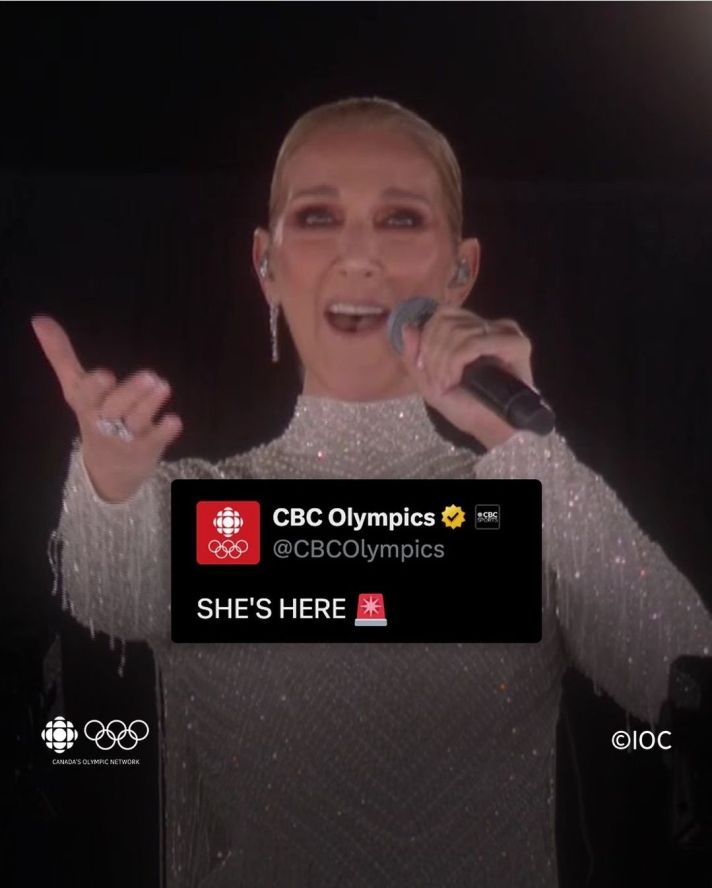
No, I was not outraged. Actually, I was mostly impressed.
Then I clicked on my social media to get into the shared experience of the Olympic games…because I love the Olympics. The back story…
Even when they seem a little corrupt or the spirit of the games is violated. Consider what happened with the first summer games I completely went over the top, head over heels, in love with: 1984. LA. Amazing. I stayed up late watching everything on CBC, cheered my heart out, wished for different outcomes, and even dreamt of the drama when I slept. 1984 as a whole was a spectacle, but the LA games were just on another level. I was in love.
Counter that with my first introduction to the other side of the games. 1988 meant a lot of things, new realities, and a different global environment in general in just 4 short years. For the Olympics it was the stripping of the title ‘fastest man in the world’, when our own Ben Johnson was tested positive for the performing enhancing substances. So I was both in awe, and in love, but was also introduced to the idea of breaking the ‘code’ of a level playing field, and the myth of fair play. I was aware of cheating in other places, but it seemed like the Olympics were at a higher level.
It was a clear representation of so many other aspects of life that can linger in the background, and may not be pleasant to talk about: Power, how we win, and what a win really is. The Olympics represent a place for all groups to represent on an equal platform. Sometimes, they bring to life what is missing or being misrepresented among the nations.
When a group takes power from another and is sitting in the wrong, we take note.
When a group expects others to function their way, or hit the highway, we take note.
Both took place in the last year, and the Olympics’ opening ceremonies really highlighted the latter. Many try to keep the games from being political, but it is hard to do when there is plenty of hurt and pain occurring by the hands of groups and governments worldwide.
The countries taking power and causing harm, that is outside of my realm of influence. But the reaction to the opening ceremonies, as a Christian leader, someone who helps people deal with their perception and perspective on power all the time, I can speak to a little.
- When I opened my social media to follow the Olympics, I did not expect the reactions I encountered.
- When I rewatched the parts people were outraged about, I still didn’t get it.
- When I read the explanations from a ‘christian perspective’, I was dismayed by the lack of knowledge of history and art.
- When I realized how many people expected the church and christianity to be the centre of the story, I shook my head.
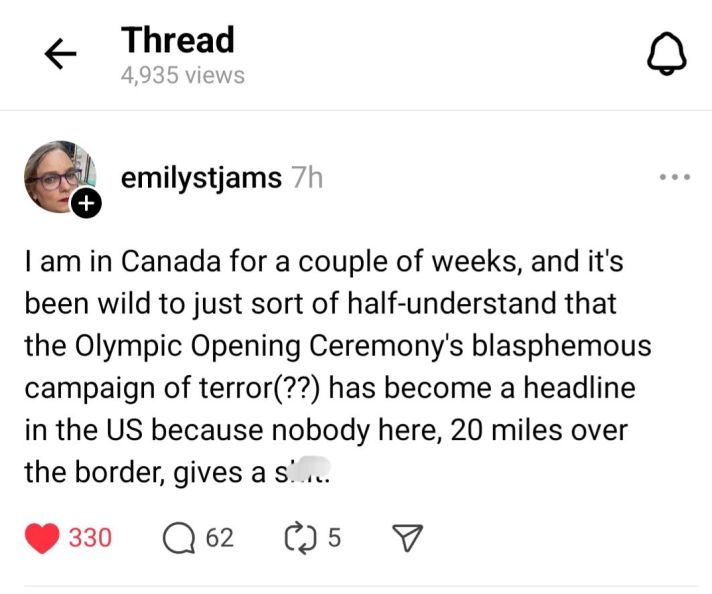
When I tell people Jesus is the centre of the message of the Bible, the incarnate understanding of an intangible God of history, and the lens by which we understand faith and reconciliation, I usually get a lot of head-nods and ‘Amen!’s. But once I offer this explanation as a starting point when it comes to application of faith, influencing all levels of life and living, I start to lose people. Why? Because you have to constantly come back to a key reality as a believer:
Our King died a criminal and his followers spread his message of hope and change from a position without power.
That understanding changes how I ‘clutch my pearls’ in outrage at what others do or say. My expectations for government change. My desire for recognition takes a backseat. My need to defend and protect the King of kings seems silly, as I realize again and again that he does not need defending. And when attacked on earth, he offered words of peace and healed an assailant’s ear in his moment of crisis. In fact, my faith is not a fight in this world, it is at its most basic a relationship with world-changing potential.
When I fight for a standard within a religious system, it becomes another structure I maintain for my own purposes. When I want it to be recognized as a sacred ‘other’, then all who I introduce it to will focus on ‘it’, rather than ‘who’ is sacred. If it becomes an object, then I ask others to worship ‘it’.
The outrage to the opening ceremonies exposed this:
- A certain group within this belief system see it as an ‘it’. A religion to be protected.
- These Christians see the world from a colonizing perspective of Christendom. We are the centre of the story, we are to be honoured, and everyone should know this.
It was not until the 4th century CE that we entered into the age of Christendom in the Western world. Christianity was first legalized, then declared the empire’s religion. From there the rest of the story is, as they say, history. Empire upon empire declaring their actions of power based on the name of the One who, “…came to serve, not be served.” The outrage and demands this past week came from an attitude of deserved power, and were just another look into what happens when we lose sight of the hero of the story. The church sitting comfortably in the seat of political or social power has never been the truth of our existence. And when we get comfortable with it we lose sight of who we truly are.
So, if you have faith in Christ, and you claim to follow him, let this serve as a reminder: You were called to love God, you were called to love your neighbour, you were called to love one another, and in doing this you create an environment where you can make disciples as you go. You were not called to live a life honoured by those around you.
If that doesn’t help you with perspective, I hope the opening ceremonies for LA 2028 are more your cup of tea.
Discover more from Eric Friesen
Subscribe to get the latest posts sent to your email.

