
Wait, I thought it was culture? Depends on who you talk to…
This past week in pop culture might have hit a few Gen X folks hard. A few notable characters of our youth and young adult eras passed away, so there has been a fair share of nostalgia and generational comparisons showing up on all the favourite social media outlets. These conversations usually include the picture or video of the person, which leads to biographical insights, and then the moments that made the memories. Every generation has them, it just seems Gen X has had a lot of crossover experience with individuals who significantly shaped the age group.

We like to draw cultural correlations in these moments and shared memories. Each person mentioned leads to a moment that creates a group who shares in how that shaped their lives, and soon it becomes a collective experience. The collective then draws on this memory to solidify something that ties them all together.
Think of a time you spoke a simple phrase in a room of strangers and all the faces lit up with recognition that turned into a quick reminiscing. Everyone somehow grows a little closer in that moment, and that moment in turn becomes another core memory attached to whatever the memory was.

We might have a series of these moments that contribute to the ‘way we do things’ and what we somehow define as ‘normal’. I often refer to this as a simple definition for ‘culture’, knowing that there volumes upon volumes on the subject, trying to define what we mean by the word.
This is why I say that CONTEXT plays a huge role in changing, solidifying, and defining a group. Culture often plays second fiddle to our environment, even in situations of heavily taught belief systems like the church, because the impact of surrounding factors make dramatic twists we may not account for. It may be a transfer of power, climate change, economic movement, or some other drastic move in the structures and the norm.
4 possibilities come to mind in the next step:
- Change is dramatic and the system dies.
- Change is dramatic and everyone quickly tries to figure out what to do next.
- Change is gradual and the group becomes a ‘closed set’. Trying to hold on to what is considered important, isolating from what is considered the outside.
- Change is gradual and the system becomes an ‘open set’. Adapting and considering where ways are changing and need to be reconsidered.
Systems or Structures?
I think of SYSTEMS as being liquid. They move, find pathways, look for gaps to fill, but generally move around things to get to where they need to be. They change and adapt as they move and are forced to move. They might construct themselves within a structure or a set of circumstances, but will need to reconstitute themselves if that breaks down.
STRUCTURES are solid in nature. They are put in place when it seems that the system is continually moving in a certain direction, or in a certain way. We put structures in place with the hope that we are accommodating the system it holds. Structures are not known for adapting, because the hope is they will reformat when the system needs to change.
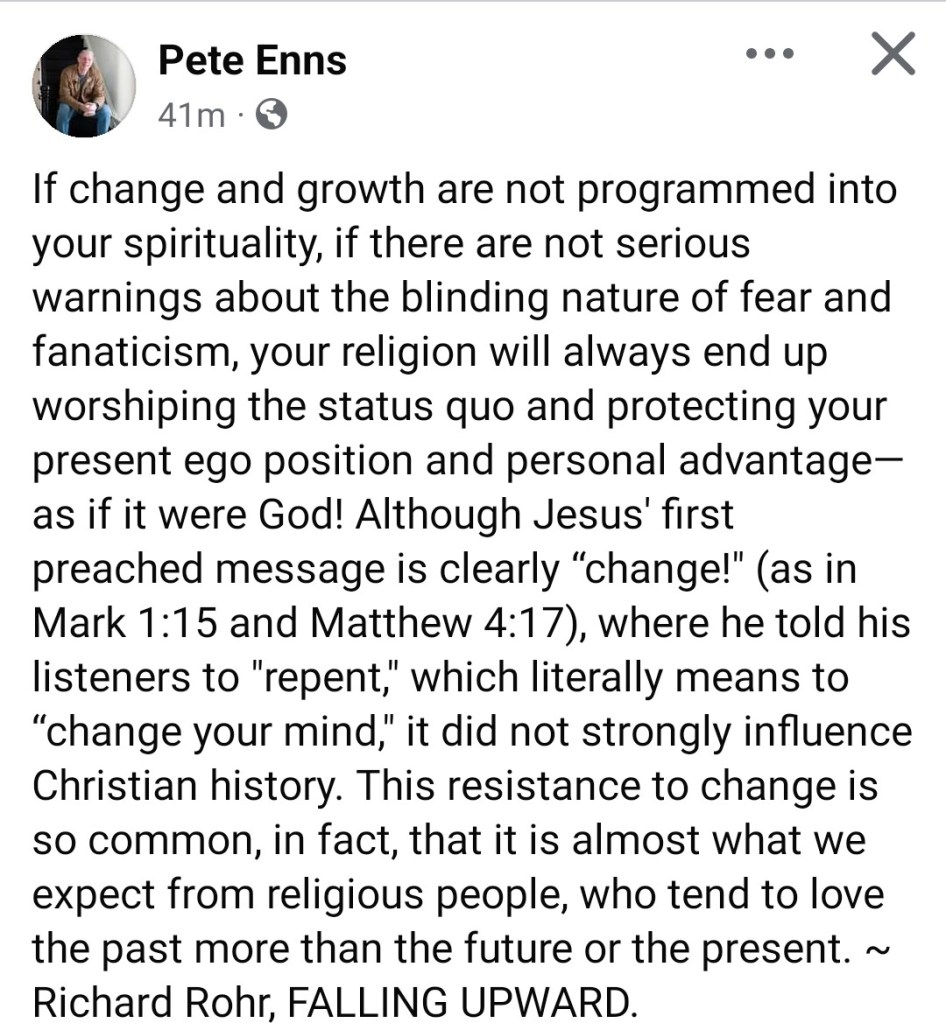
Unfortunately, a culture and a way often tend to desire to hold onto a system like it is a structure. The way of growth, living, communicating becomes rigid or set in a certain pattern, and the longer it is forced to hold, the less like liquid it becomes. Any new entries to the system cannot find a way to move within it, they simply try to hold a spot within the concrete, and try not to cause a disturbance.
The system is always being influenced by the surroundings, and the structure either helps it adapt, or causes it to solidify within the space. Depending on what is at the centre of your system, it goes back to the old question that most churches face: What is the balance of welcome and preservation?
People and places that don’t pay attention to the value of context often struggle with what is happening on the inside at some point. Like a pressure cell, it is hard to maintain that balance between the inside and outside. This is why I make that bold statement at the beginning: Context is king. And when we wait too long, we struggle to break free from ’empire talk’; where we are figuring out how to upkeep our own little kingdom.
How are you shaped by your context? Are you aware of how you impact yours?
Discover more from Eric Friesen
Subscribe to get the latest posts sent to your email.

