
This week I had a pretty powerful reminder about a moment that impacted me deeply and shaped my direction.
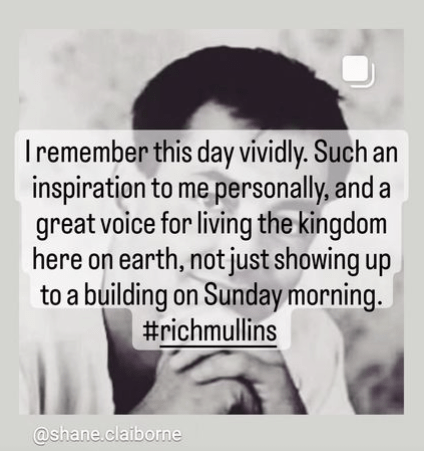
I can vividly recall sitting in a youth room with my then wife and infant daughter, waiting for our small group of youth to show up in our ‘upper room’, kicking off a new youth ministry year. Our little home was deeply impacted by the music, writing, and spiritual direction of Rich Mullins, and shortly before we headed over to the church we were struck with the news of his tragic passing. We tried to get the students to understand the grief we felt, played his music the whole evening, but knew there was a disconnect. He just wasn’t a big deal to them.
I realized something big in my faith had happened. Rich, through his music and many quotes that were floating around, before the time of social media, had really sunk into my soul. He expressed a desire for a space where all people could struggle and wrestle with their humanness while learning of a grace that was bigger than ever imagined. He openly shared of his discontent with the institutional church which seemed more concerned with a tribal allegiance to a morality cult that provided a whitewashed, consumer driven temple, than a movement of people changed by a God who loves messed up individuals. Rich was speaking my language. It messed me up as a young church leader, because I deeply desired the creation of this space in the churches I served. That usually did not bode well with the general populus.
You may have already seen this on the blog, or in my new book filled with my thoughts on church leadership over the years (Leading Freely: Good, Bad, and Hopeful Thoughts on Church Leadership), but being a child of parents going to AA (Alcoholics Anonymous) and not realizing how unique it was to hang out with the ‘group’ was at the time… [sorry for the run-on sentence] …I struggled with church, but loved going to AA. This is the part of me that resonated soundly with Rich Mullins thoughts on faith and church, and I felt it all the time…
Why was church not more like AA?
It leads me to some of the thoughts on church leadership these days, the over abundance of megalomaniac horror stories, and the bigger walls, tighter theology, more dogmatic statements, the call to ‘us and them’, and chastising those who are struggling to find a greater meaning in the midst of it all. There has been much talk recently of some pastors sharing how hard their time has been ‘behind the pulpit’ in the 21st century. The 80s and 90s evangelicalism, based on the consumerist modern era church of the 20th century, did not do a whole lot of favours to rethinking how church could be more like what we all felt it ‘should’ be, and less like a shopping centre.
Vocational pastors sharing stories of being tired, disconnected, worried about evaluations, worried about the ‘show quality’ of their services, and keeping attendance up, almost seems redundant. But there are many places and spaces where this is still the norm, and I would venture to say those places and spaces are in the vast majority.
Today’s metrics for management and employee retention are largely based on 2 factors: Engagement and Satisfaction.
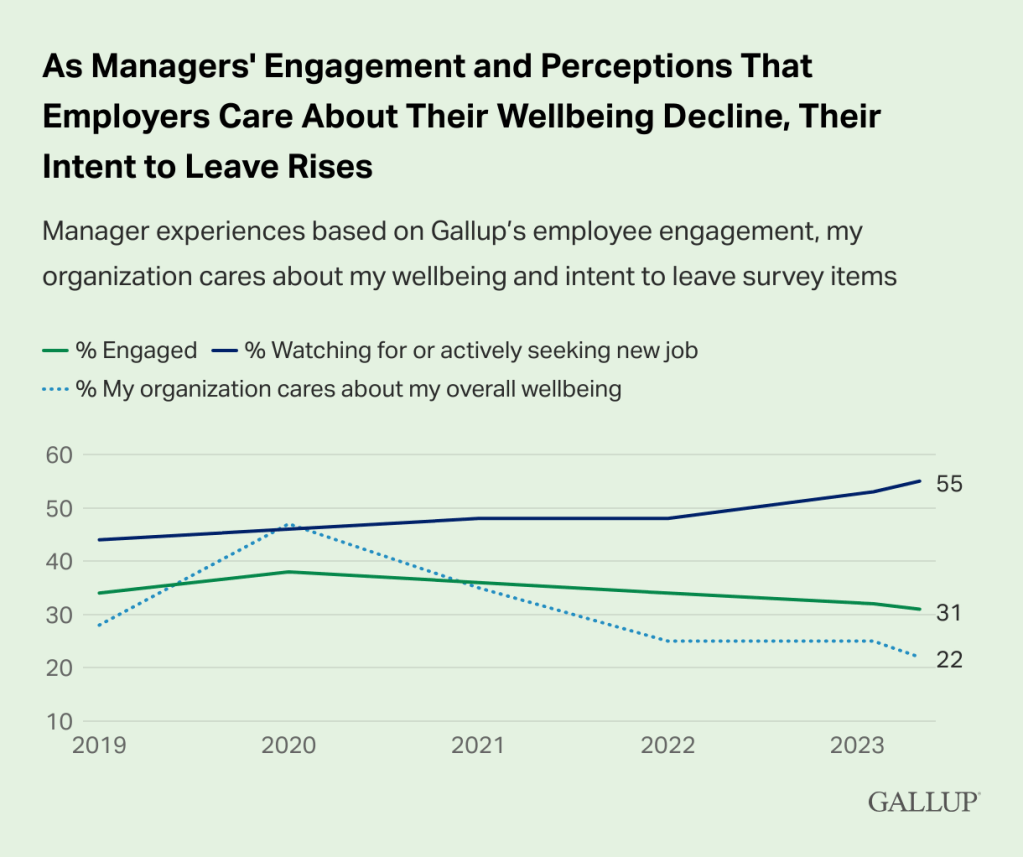
If we consider the church as a consumer body, one that participates by showing up and giving input on how much they enjoy being served, then the place of the visible leader is one of customer service at best. Much like any other ‘manager’, something I resented being called in my final 3 years in my last permanent position, everything for the pastor is based on feeling engaged, and providing suitable means for others to feel engaged, and satisfied, of course making sure all consumers of services are satisfied as well. It does not look at items like community, care, joy, kingdom, etc. as key factors in overall health, largely because they are immeasurable.
While those 2 metrics can be rephrased and play some importance for each role, I don’t like this model, as you may have guessed, and I’m pretty sure Rich didn’t either.
In a consumerist model everyone is shorted in some way or another. The one providing is also the one expecting something in return, the one who is satisfied expects that there will be more or better to come. The cycle continues and the snake chases its tail. In a kingdom model, there are few metrics that make sense, values are placed on ‘things’ which bring little return, and a mess is not a problem, it is simply part of being in an imperfect world, looking daily to the Perfect.
You might say Rich Mullins broke me, but AA laid the groundwork, and I am very much OK with that. The ideal of church is still a beautiful thing, but as always, may need to come to grips with its own messiness.
Discover more from Eric Friesen
Subscribe to get the latest posts sent to your email.

