
“It’s a beautiful day in this neighborhood…” and the song goes on.
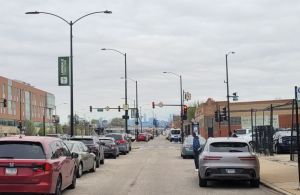
Most people in North America know the theme song for ‘Mr. Rogers’ Neighborhood’ in their memory files somewhere, even if you grew up north of the border like me. I actually did not have any working knowledge of Mr. Rogers until much later than my developing years, we just did not get that channel with ‘farmer vision’, so my world was formed with the likes of ‘Mr. Dressup’. Now because of the internet I cannot help but sing along to the song in my head every time it comes up! As we have come to know today, both Fred Rogers and Ernie Coombs (Mr. Dressup) turned out to be amazing humans who both embodied the message they brought to the lives of many. They were good neighbours.
“But Eric, what if we know everyone that lives around us?”
This came after a recent discussion in church on becoming good neighbours first before anything else in daily life. It is an interesting predicament when you ask people to love their neighbours regularly, especially in more rural settings. What if we are all trying to be the best neighbour but our neighbours all seem to get along? My simple response is to expand the realm of who is your neighbour. This of course follows up on my asking them: Have you asked your neighbour if you are a good one?
On Good Friday we had to discuss a trailer that was parked without consent on our property. Even though a conversation had already begun, the question remained, what is our responsibility in all of this. I stuck around the church building a few hours after our gathering, and I am glad I did, because I soon had a couple of the existing neighbours arrive to discuss what was happening. Safety, security, cleanliness, etc etc all came up as people wanted to be caring without putting others in harms way. It did not take long for one to bring up the simple question:
“I know we are supposed to love our neighbour, but how does that apply here?”
It turned out the town was already on the case and the trailer was removed soon. There were other issues at play beyond our knowledge or control, so it was out of our hands regardless of how we would answer that question. But, the question stuck with me as I drove down to Chicago a few days later for the InHabit 2025 conference. The Parish Collective annual gathering seeks to respond to that question in all that we conspire to do in loving our neighbourhoods. I say ‘respond’ in these conversations because we are not looking for a finite answer in the midst of the grey of life; we share, listen, discuss, pray, and continue to walk with others right where they are.
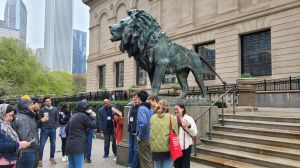
I strive to be a better neighbour. It is easier to tell people to just be one than it is to wrestle with how to do so in real time. I had a few humbling conversations with my next door neighbour within this same time frame as what I shared above, all of which helps me to understand personally how to love my neighbour. I was not ‘humbled’ as in being on the wrong end of a talking-to or anything like that, but I was humbled in how I had lacked in helping my neighbour understand they were loved to the best of my ability. Humility is such a great place to start with neighbouring, and it carries through every level, especially in the grey:
- Humility means I do not expect the worst of the other person.
- Humility accepts that I am not the gold standard for humanity.
- Humility does not have all the answers.
- In fact, humility likes to listen before speaking. I have a tough time with that one.
- With that in mind, humility likes to ask questions as well, not waiting for others to speak up.
It is hard to love the other person without a healthy dose of humility.
I loved the many experiences of the InHabit conference again this year. There is the opportunity to sit with those you already know and just soak in the camaraderie, and that is not always a bad thing. But just like a good neighbourhood, you need to take that next step and introduce yourself to a whole bunch of people that are not yet your friends! The stories of neighbourhood expand, the commonality of like experiences shine out as a sort of ‘curriculum’ for discussion, and we learn from new challenges presented. The kingdom of God is on full display, like a microcosm of society, bigger than our imaginations can hold, and walking ahead of our endeavours! Chicago may have been the place to gather, explore, and host, but it really was an opportunity to meet hundreds of communities at once.
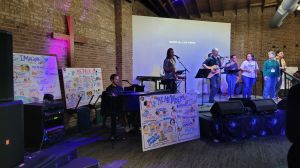
The 4 key challenges are something I will digest for the months to come, hopefully with a fair share of inspiration attached:
- Remember… Where we came from.
- Re-Imagine… Contextualize… Same God, different contexts.
- Repair… Name the issue, tell the truth, give back, share your power.
- Resolve… “So much pain, but there is an abundance of beauty. We embrace it all!”
Won’t you be my neighbour? That is the question on so many levels today! The political scene is filled with conversations about who is a friend or neighbour, states and provinces, language barriers, you pick where you want to start and there will be plenty of heated discussion around it. Fortunately Jesus was clear on the starting point in the conversation, and it is not the other person. It is you and I.
Love your neighbour as yourself. That is a nuanced conversation, not just a statement. So prepare to be challenged once you commit!
Discover more from Eric Friesen
Subscribe to get the latest posts sent to your email.

