
When I share with people my work of transitional leadership there is no shortage of follow-up questions and stories of familiarity. The questions part makes sense to everyone, the ‘stories of familiarity’ not so much. What I mean by this is a story or a memory shared by someone trying to make sense of what I mean, so they share something similar. You and I encounter (and do this) often with anything we only partly understand, so we describe the closest thing to it in our memory bank, right or wrong. In some cases this has been declared as ‘mansplaining’, but that is a topic for another day.
What does change mean to you?
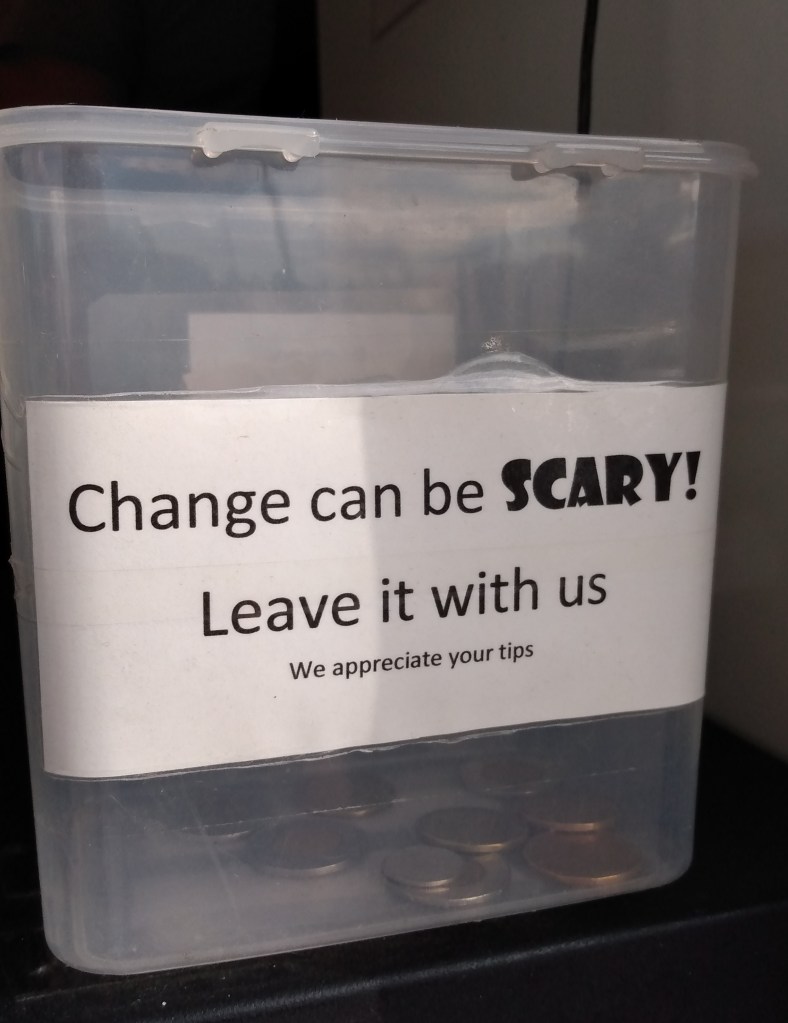
This is the part I home in on because it is the one thing true for all of us on the planet. Setting, culture, education, home life…no matter what separates us change is common to us all. Even if we don’t like to talk about change happening. I have written about change before (more than a few times) but here is the most recent entry on the subject: The song remains the same.
Lately I have been reflecting on how many conversations on transition come up on a regular basis that people just do not recognise as transitional moments. The reason I call them ‘transitional conversations’ is because they are not always recognised as moments of recognised change in the person’s life. Often they are only seen as a hurdle or a possible decision for the future, not a present moment crisis to contend with. What that means is that during the conversation a realisation of changes present or coming sets in as we unpack things. I often see this on a larger scale with a group or a church, where the whole room suddenly ‘gets it’, that things are changing right now. At an individual level it feels like things are more negotiable…
– Is it time for me to change careers?
– A relational breakdown that deeply impacts the road ahead, even if it doesn’t seem like it immediately.
– What happens if I change my major in school after all these years of working towards something different?
– If I don’t think about my future, I won’t have to consider the impact of the decisions I’m making right now…
As you know, there are thousands of tiny questions and thoughts in between that we do not put much energy towards but deeply impact us when we allow the time for them. This is why I consider my ‘coffee ministry’ so important, and when I get a chance to impart any wisdom I have on anyone trying to understand ministry in any way, I highlight the importance of simple conversation. There is a sacred time spent in these conversations that reveals points of reflection in each one of us, things that can seem like nothing in a passing moment, but really hold a thread to the heart. Those simple conversations, if held viewed and held with the importance they potentially contain, are all moments of reflection on the present and a small understanding of a transition ahead.
For a time I referred to this work as ‘transformational ministry’. It was too abstract a word for what I invited people into and so I dropped it. The reality of incarnational work, the value of being present and with the other intentionally, is that it is transformational for all parties involved. At all levels of relationship we are inviting people to unpack and reflect on what might be, starting from what is, informed by what has been. We are all in transition in some way, acknowledging that even if we think we are living in some kind of permanence it is in fact transforming us.
This week consider your casual conversations, you just might be a part of someone’s unrealised transformation. Or maybe your own.

PS – I am having a blast working with Messiah Lutheran Church (Winnipeg) trying out my new transitional journey short-format. Thanks for the opportunity! You can click here if you want to take a look at what that new format entails:
Discover more from Eric Friesen
Subscribe to get the latest posts sent to your email.


Looks like a good write. I’ll need to read thrice. You’ve started using to bid a language for us peons. My family is in pissy mood this morning. Lawnmower don’t start , yelling did start. Learned a new word yesterday, get to use it already. Amathia.
LikeLike